
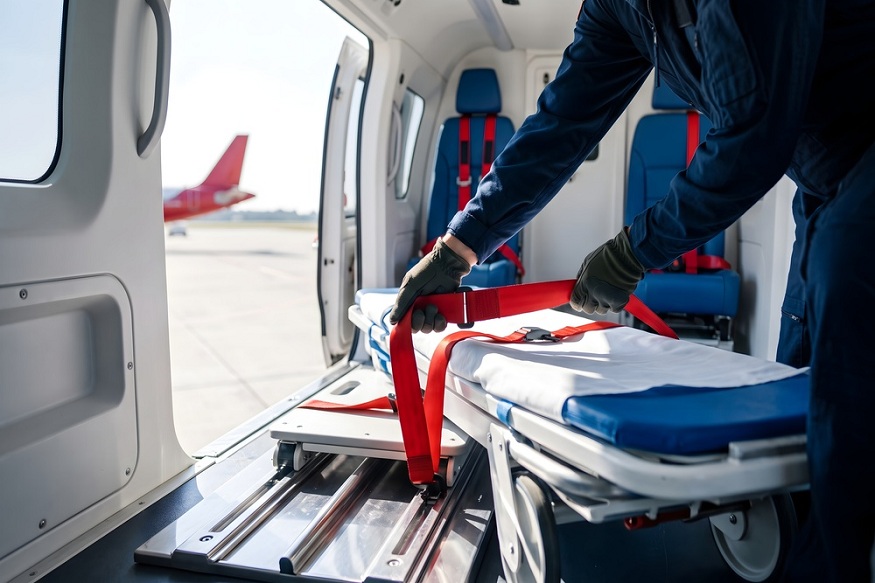
Real estate agents will tell you it all comes down to location. Yet the costliest space in emergency medicine is not a building at all. It rides high above the ground, packed into the cabin of a medical helicopter. Every foot in that cabin earns its keep. There is no time to rummage for a tool when a life hangs on the line. Odd as it sounds, this cramped little cabin may be the most valuable square footage anywhere in medicine.
Small Space, Big Job
A helicopter cabin is not roomy. Set it beside a hospital room and it looks tiny. Even so, a medical crew handles heavy work inside those walls. They track heart rates. They clear airways. They stop bleeding and keep patients steady as the aircraft races toward a hospital. Somehow it all has to fit. The stretcher, the oxygen, the monitors, the medications, and the crew themselves all crowd into the same small box. Once space gets this tight, planning turns into the whole game.
Read More: Understanding Behavior Health / Addiction: Pathways to Recovery and Wellness
Why Layout Changes Outcomes
The way a cabin is set up can shape how a patient does. When the gear sits close by, crews react faster. A second saved reaching for a monitor might be the exact second that tips a bad situation toward a better one. A sloppy layout does the reverse. A crew member forced to twist, stretch, or dig through a drawer during an emergency loses time that cannot come back. Careful design erases those wasted motions. It places each tool where it belongs, so hands find it on instinct.
Building for the Work
Pulling this off takes both skill and hard-won experience. Engineers study how crews really move once the wheels leave the ground. Where do the hands reach? Where do the eyes go? How does a patient get loaded, then rolled back out again? Those patterns guide the plan. Companies that focus on the best interior layouts for medical helicopters make every inch count, and providers like LifePort have earned a strong name for turning tight cabins into workspaces that just flow. Their planning keeps crews steady even when the pressure spikes. That effort shows up on every flight.
Safety Rides Along
Layout is about far more than convenience. It keeps people alive. Equipment has to be locked down tight so that it stays put through rough air or a jarring landing. Loose gear becomes a threat the instant the aircraft jolts. A well-planned cabin looks out for the crew too. Team members need to reach a patient without unbuckling at the wrong moment. Good design lets them stay strapped in while they work. Reaching the patient and staying safe should never be at odds, and the best cabins manage both at once.
Comfort Counts Too
Long missions wear on everyone aboard. A cramped, awkward cabin saps a crew and makes hard work harder still. A smart layout gives medical teams a little breathing room. That comfort keeps them sharp, and a sharp crew simply performs better. Patients feel it as well. A cabin that allows calm, steady treatment makes a frightening flight a bit easier to endure.
Read More: Premier Vision: Elevating Your Perspective on Eye Care
Conclusion
The cabin of a medical helicopter proves that worth has nothing to do with size. This slim stretch of space carries enormous weight in emergency care. Get the layout right, and crews move quicker, patients ride safer, and every mission runs a shade smoother. It may be some of the smallest space in all of medicine. It may also be the most important. Plan it well, and it repays you at the very moment the stakes run highest.